Galleria Studio Cenacchi, Bologna Strada Maggiore 63, Bologna
Curated by Raffaele Quattrone
May 5 – June 4, 2026
Opening Hours: Tuesday to Saturday, 4:30 PM – 7:30 PM or by appointment
Special Openings: Saturday, May 16 and Sunday, May 17, 10:00 AM – 7:00 PM
For Diverdeinverde Contacts: +39 051 365517 | galleria@studiocenacchi.com
FREE ENTRY
Opening on May 5 at Galleria Studio Cenacchi in Bologna, the exhibition Unstable Ecologies. At the Point Where Everything Transforms , which brings into dialogue the research of Roberta Cavallari and Sabrina Muzi, curated by Raffaele Quattrone.
The exhibition constructs a space of tension between two modes through which reality modifies, regenerates, and continuously redefines itself, starting from an implicit question: what does it mean today to observe a landscape? And, above all, what remains invisible within what we believe we see?
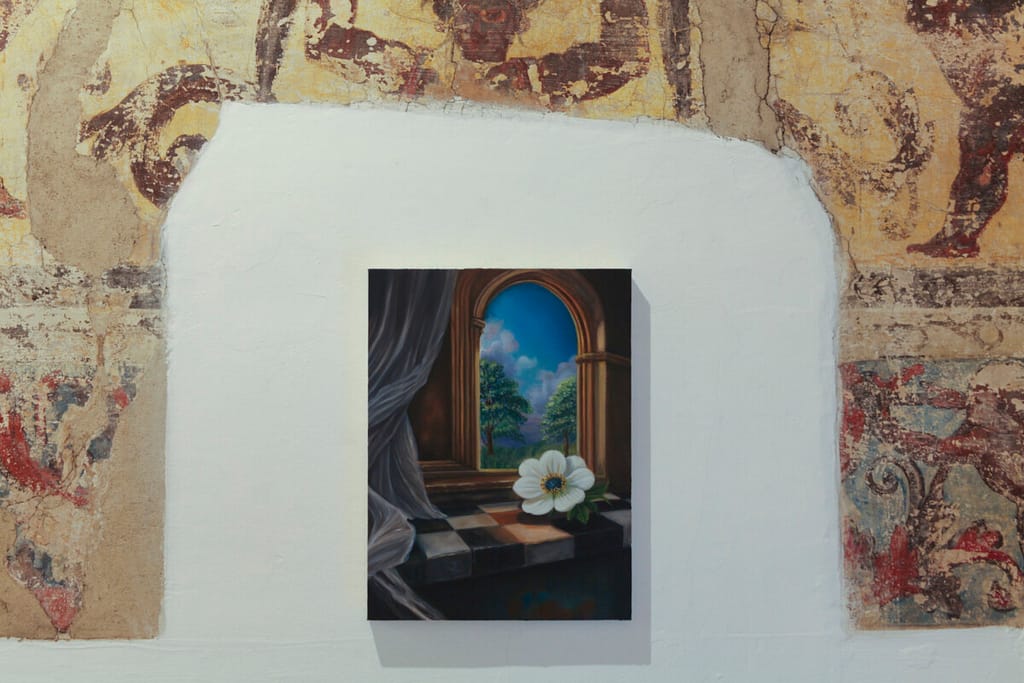
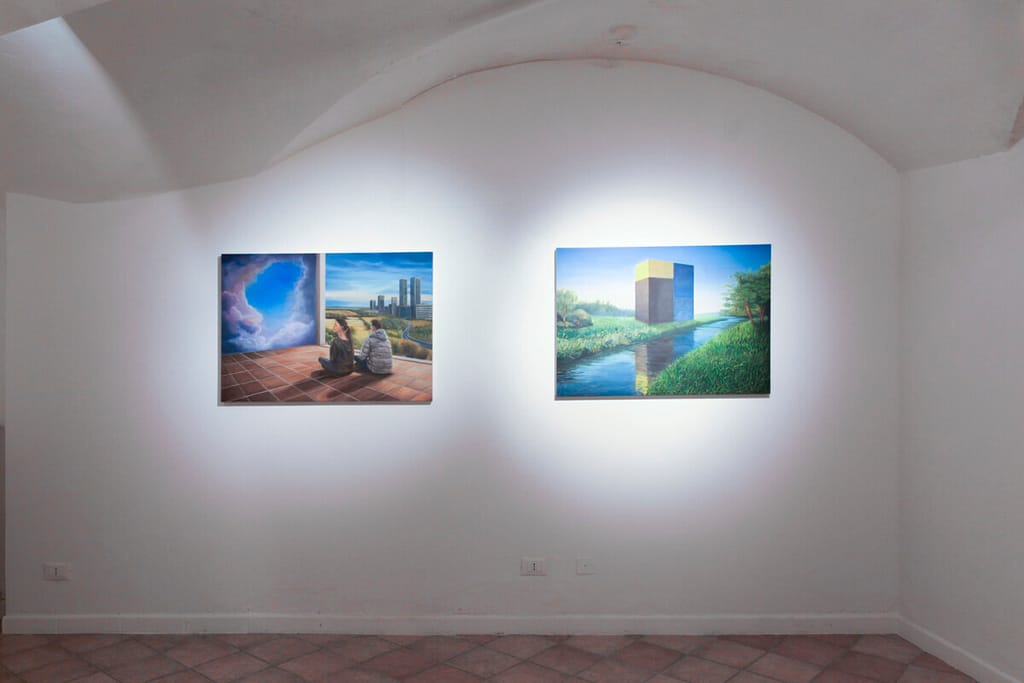
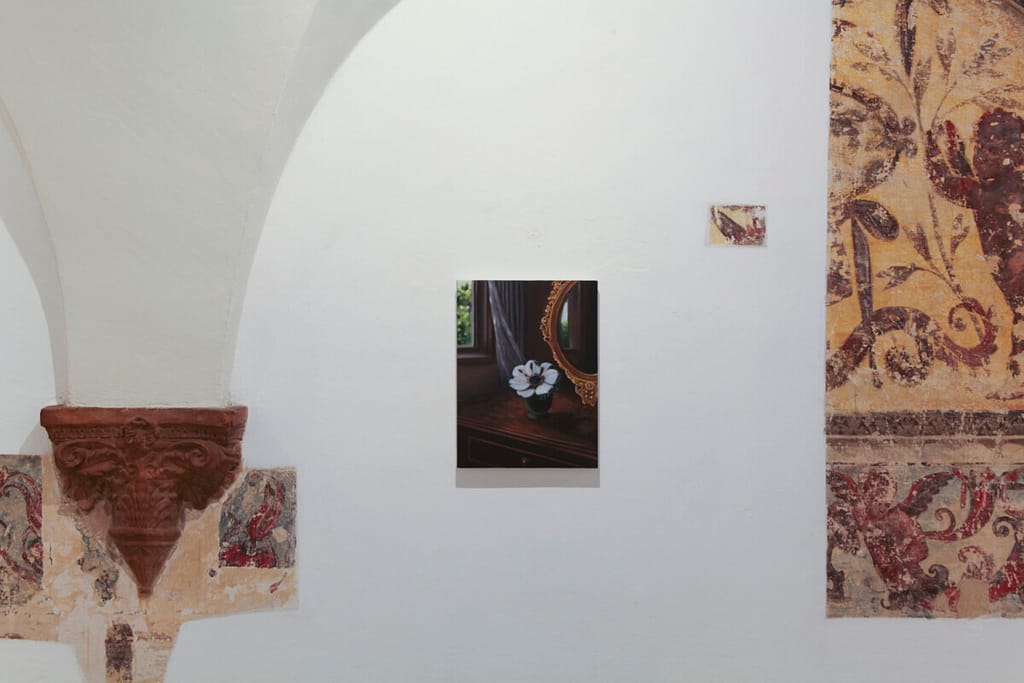
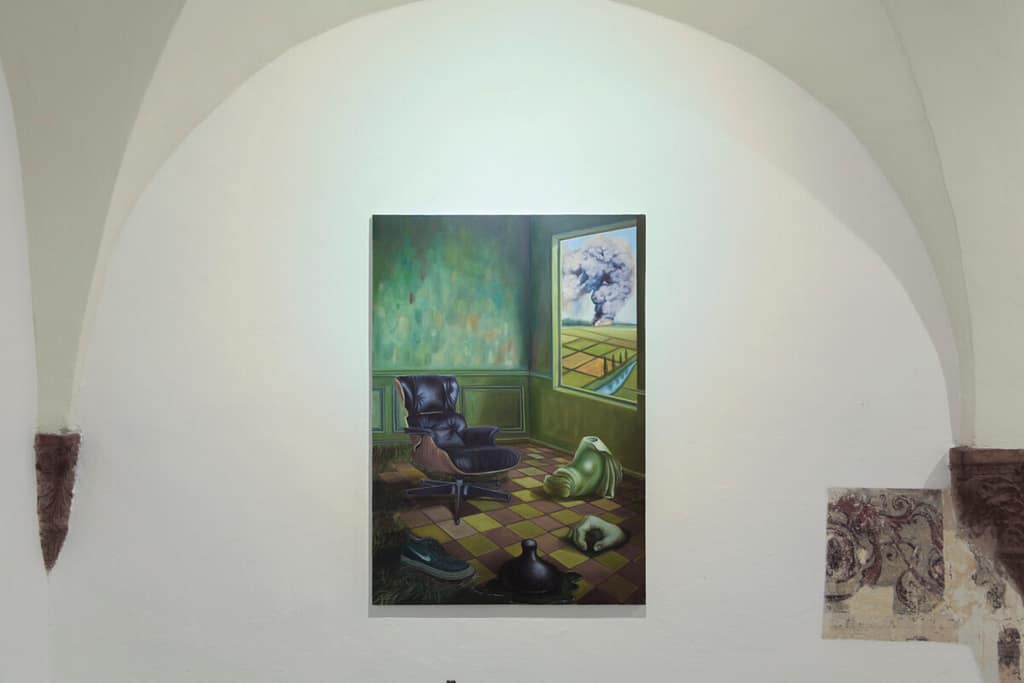
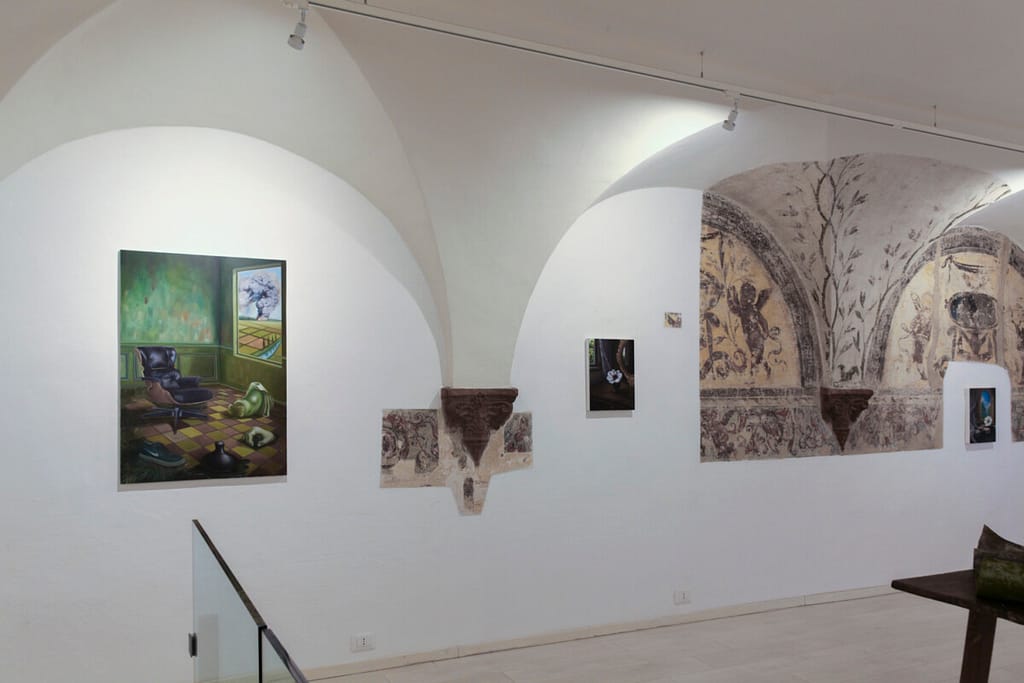
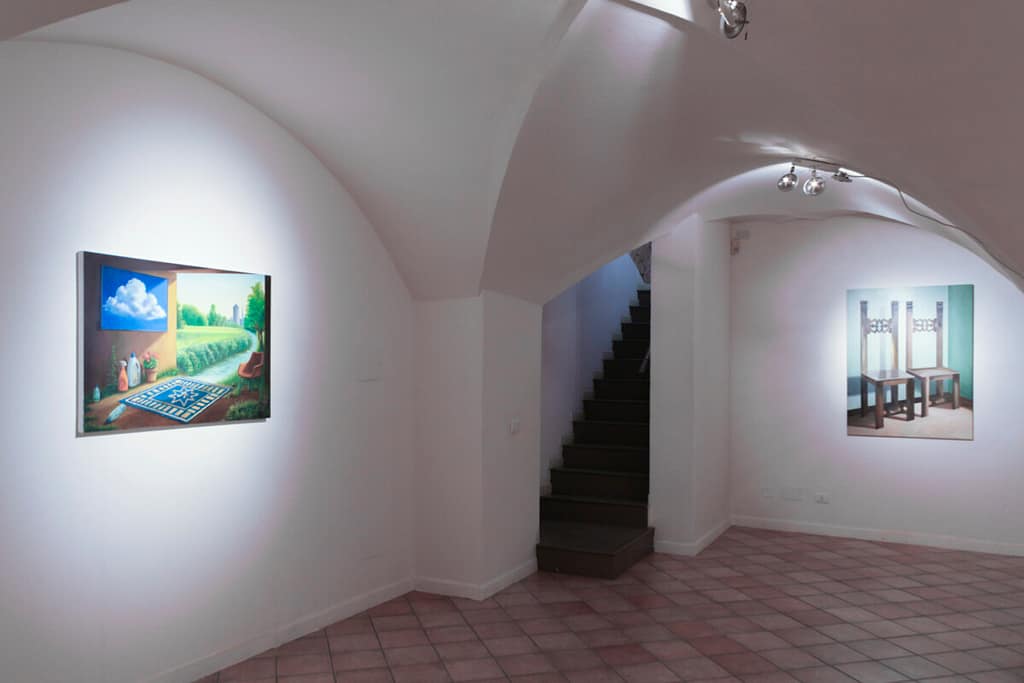
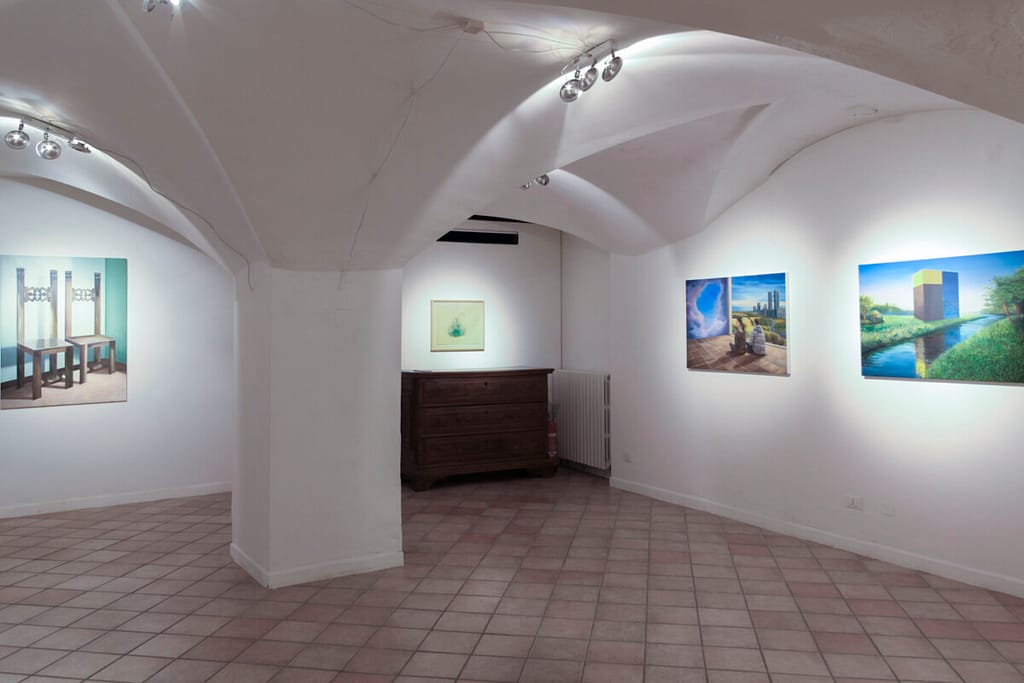
If Muzi works on a dimension of emergence and invisible vitality, Roberta Cavallari instead introduces a subtle fracture in the visible. Her paintings, while maintaining a figurative basis, are traversed by minimal shifts that alter the relationship between elements and produce a sensation of misalignment. Interiors apparently neutral, often devoid of human presence, configure themselves as suspended spaces in which architectures, perspectives, and light sources assume a dominant, almost structural role. In the landscapes, signs emerge that refer to a human or technological intervention: monitors that return unreal atmospheric images, natural forms that assume artificial qualities, geometric elements that insert themselves as ambiguous presences, between constructed object and digital simulation. These anomalies do not produce evident ruptures, but act through slippage, insinuating themselves into perception and making visible a transformation already in act. The world represented by Cavallari is not a hypothetical future, but the present itself, observed through the logics of the Anthropocene, in which nature and artifice are by now deeply intertwined.
The dialogue between the two artists is not constructed on a contraposition between natural and artificial, but on a more complex and contemporary tension: on one side a force that continues to generate and regenerate itself, on the other a transformation that profoundly modifies the conditions of the visible. In this intermediate space, painting assumes a critical and perceptive function. It does not limit itself to representing the world, but interrogates its thresholds, making visible those processes—natural or cultural—that operate beneath or beyond immediate perception.
Unstable Ecologies thus configures itself as a field of attention: an invitation to remain in the point where everything transforms, where growth and mutation, continuity and alteration coexist without resolving themselves, continuously redefining our way of inhabiting and perceiving.
(excerpt from the press release)
Ecologie instabili. At the Point Where Everything Transforms. Inaugura il 5 maggio presso la Galleria Studio Cenacchi di Bologna la mostra Ecologie instabili. Nel punto in cui tutto si trasforma, che mette in dialogo le ricerche di Roberta Cavallari e Sabrina Muzi, a cura di Raffaele Quattrone.
La mostra costruisce uno spazio di tensione tra due modalità attraverso cui il reale si modifica, si rigenera e si ridefinisce continuamente, a partire da una domanda implicita: cosa significa oggi osservare un paesaggio? E, soprattutto, cosa resta invisibile dentro ciò che crediamo di vedere?
Se Muzi lavora su una dimensione di emersione e vitalità invisibile, Roberta Cavallari introduce invece una sottile frattura nel visibile. I suoi dipinti, pur mantenendo una base figurativa, sono attraversati da scarti minimi che alterano il rapporto tra gli elementi e producono una sensazione di disallineamento. Interni apparentemente neutri, spesso privi di presenza umana, si configurano come spazi sospesi in cui architetture, prospettive e fonti luminose assumono un ruolo dominante, quasi strutturale. Nei paesaggi emergono segni che rimandano a un intervento umano o tecnologico: monitor che restituiscono immagini atmosferiche irreali, forme naturali che assumono qualità artificiali, elementi geometrici che si inseriscono come presenze ambigue, tra oggetto costruito e simulazione digitale. Queste anomalie non producono rotture evidenti, ma agiscono per slittamento, insinuandosi nella percezione e rendendo visibile una trasformazione già in atto. Il mondo rappresentato da Cavallari non è un futuro ipotetico, ma il presente stesso, osservato attraverso le logiche dell’Antropocene, in cui natura e artificio risultano ormai profondamente intrecciati.
Il dialogo tra le due artiste non si costruisce su una contrapposizione tra naturale e artificiale, ma su una tensione più complessa e contemporanea: da un lato una forza che continua a generare e rigenerarsi, dall’altro una trasformazione che modifica profondamente le condizioni del visibile. In questo spazio intermedio, la pittura assume una funzione critica e percettiva. Non si limita a rappresentare il mondo, ma ne interroga le soglie, rendendo visibili quei processi — naturali o culturali — che operano al di sotto o al di là dello sguardo immediato.
Ecologie instabili si configura così come un campo di attenzione: un invito a sostare nel punto in cui tutto si trasforma, dove crescita e mutazione, continuità e alterazione coesistono senza risolversi, ridefinendo continuamente il nostro modo di abitare e percepire il reale.